Kayla Kerbel, Visual Merchandising Manager for the Americas at Fjällräven, has a job that would make most retail professionals pause.
She’s the VM leader responsible for translating a brand born in 1960s Sweden into a cohesive in-store experience across 30+ locations in the US and Canada — with expansion into South America underway.
That alone is a massive scope. But what makes Kayla’s role especially interesting isn’t just the scale. It’s the philosophy she’s working with.
Fjällräven doesn’t operate the way most outdoor brands do. There are no trend-driven pivots. No seasonal reinventions designed to generate buzz. No racing to keep up with what competitors are doing.
Instead, the brand bets on something most retailers talk about but rarely commit to: Telling the same story, rooted in the same values, over and over again — and trusting that’s more than enough.
Kayla is the person who makes that bet pay off on the store floor.
And the way she does it offers a perspective that any retailer managing multi-location visual programs can learn from — that the most effective reinvention doesn’t always come from watching the market. Sometimes it comes from going deeper into what already makes you different.
Ask Kayla what differentiates Fjällräven from the rest of the outdoor market, and she doesn’t start with aesthetics or campaigns. She starts with the product.
She points to the longevity of Fjällräven’s pieces — garments and gear designed to last years, not seasons — and the fact that the brand operates repair centers at both its US and Canadian warehouses, with some stores even offering in-house repairs. She notes that competitors have started following suit, building their own repair programs after seeing the success of Fjällräven’s model.
Then there’s the brand’s relationship with trends, or more accurately, its refusal to chase them. Kayla explains that Fjällräven has never positioned itself as a fashion brand. The focus has always been on functionality and simplicity — a philosophy she traces directly to Swedish design principles.
She points to the Greenland Jacket, a piece that’s been in the line since the brand’s early days and hasn’t changed much since. It’s not a nostalgia play. It’s proof that when a product is designed with purpose, it doesn’t need reinvention.
“We’ve never been chasing trends,” Kayla says. “It’s more about the functionality.”
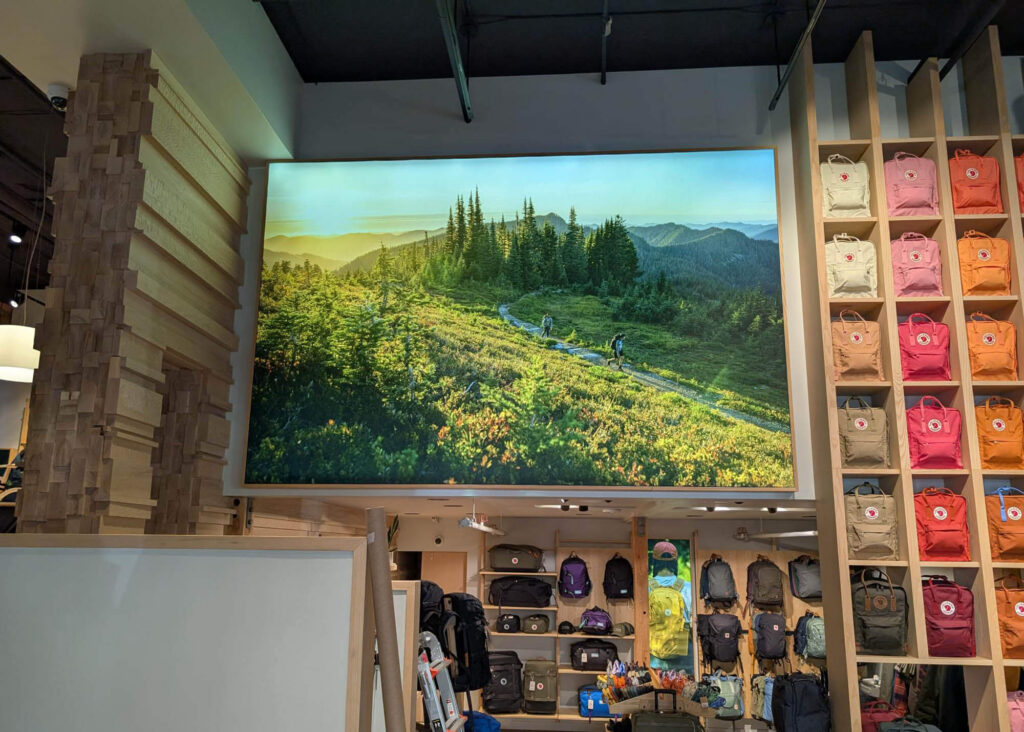
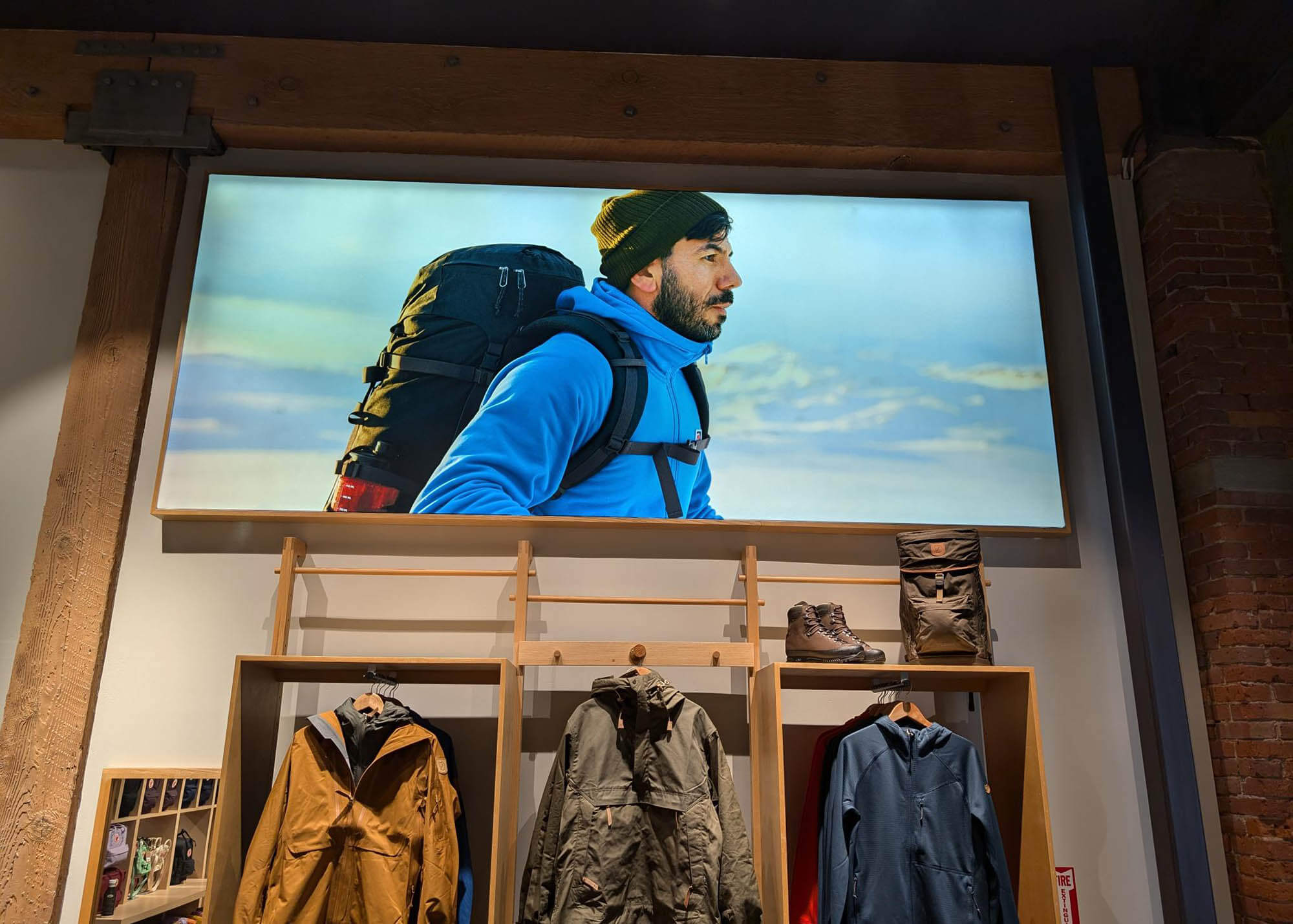
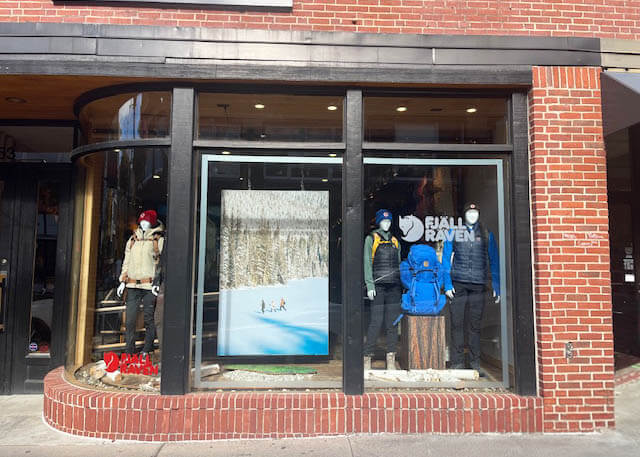
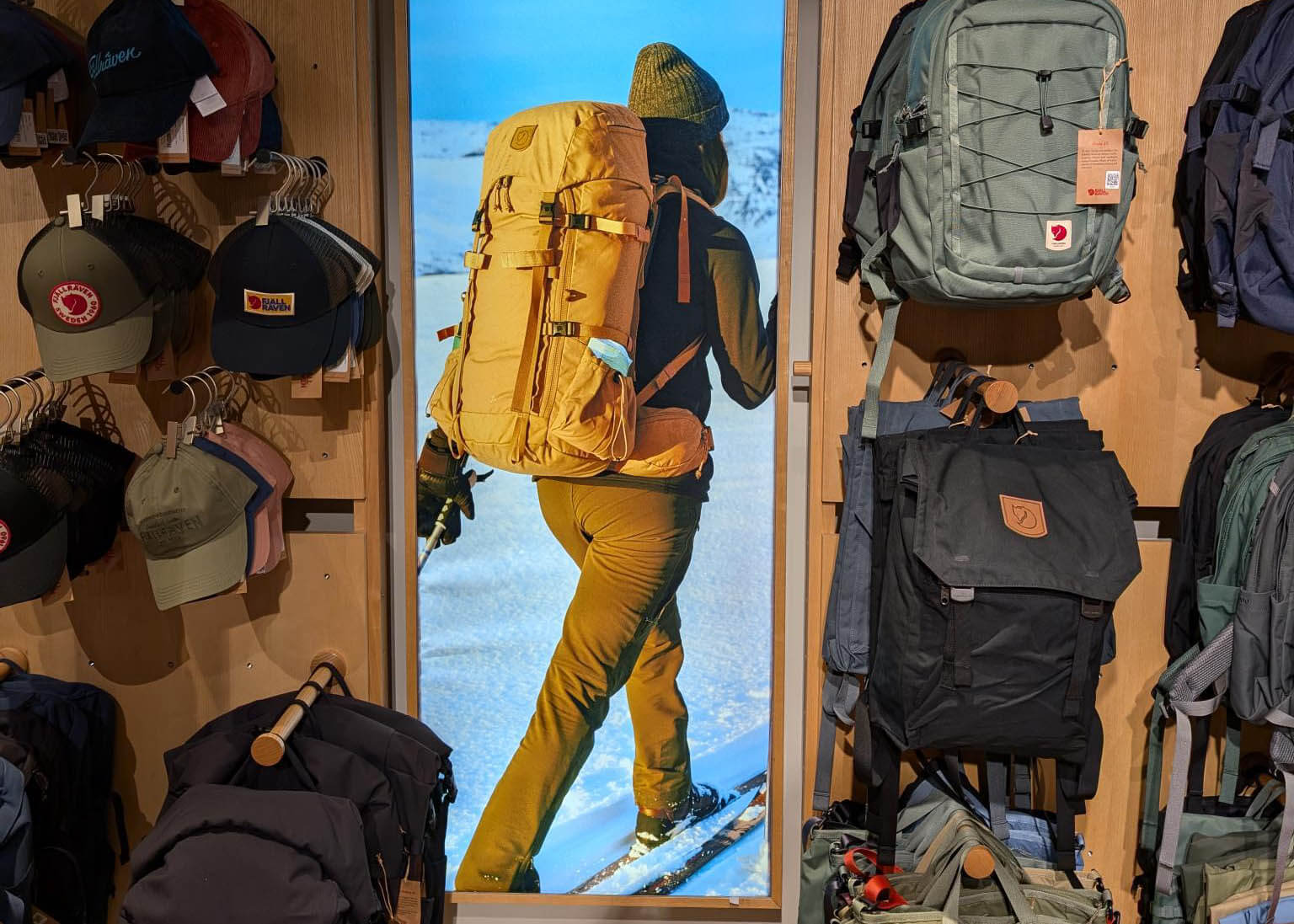
That mindset extends to how the stores themselves are built. Fixtures are intentionally simple. Merchandising is clean and uncluttered. The design doesn’t try to compete with the product — it supports it.
It’s a distinctly Swedish approach, and it takes a certain kind of confidence — both from the brand and from the VM leader executing it — to resist the urge to over-design in a market where more is usually more.
If Fjällräven’s philosophy is rooted in simplicity, Kayla’s secret weapon for bringing it to life is story.
Not brand narrative in the abstract sense — actual product histories that give customers something to connect with emotionally. And for Fjällräven, those stories run deep.
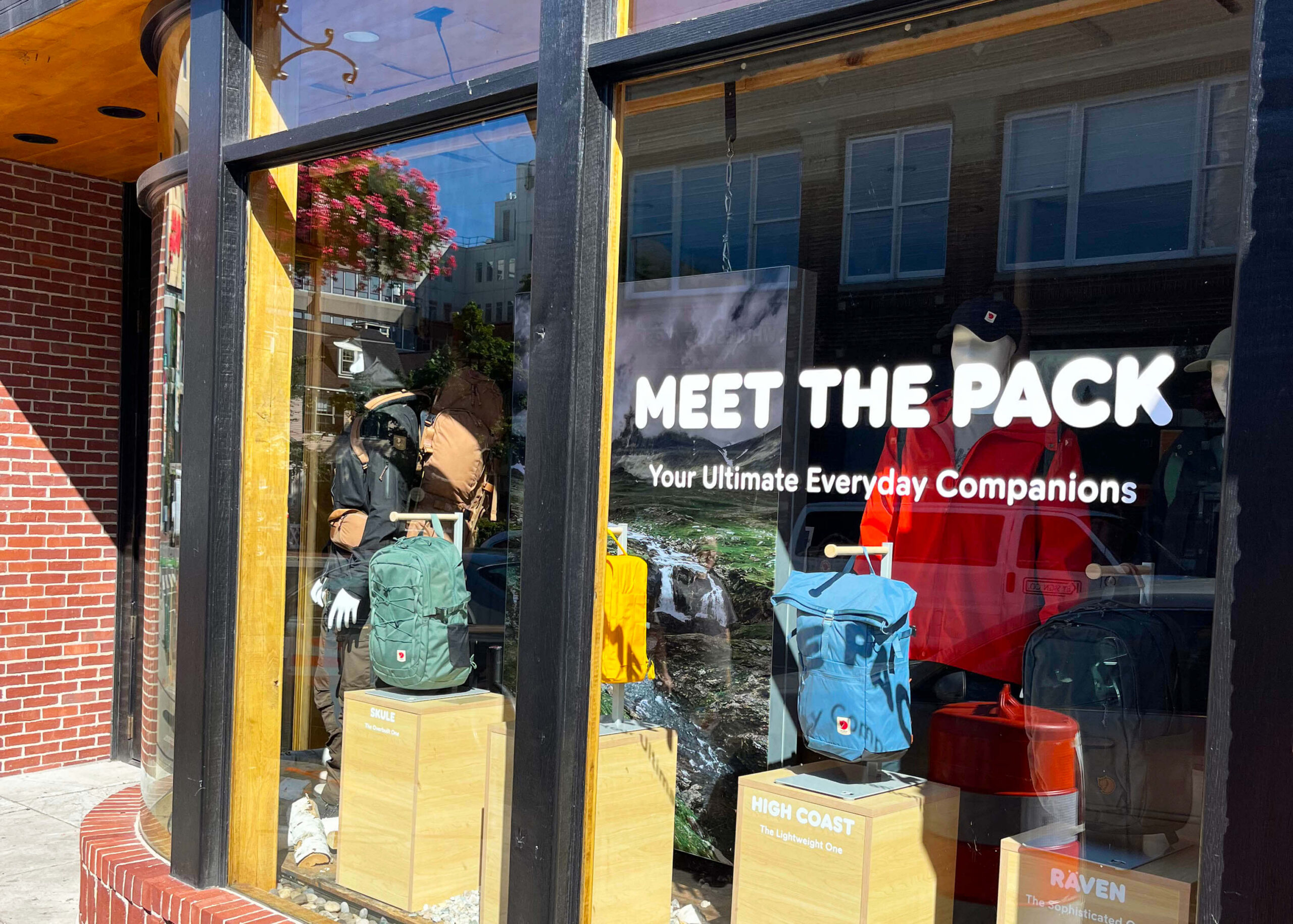
Take the Kånken backpack, arguably the brand’s most recognizable product worldwide. Kayla explains that it was originally designed in the 1970s to help Swedish schoolchildren carry binders without injuring their backs. That’s why it’s square — the shape allows for precise material cutting with minimal fabric waste, making it one of the more sustainable designs in the brand’s lineup from the very start.
The Kånken wasn’t designed to become a global icon. It became one because the story behind it resonated.
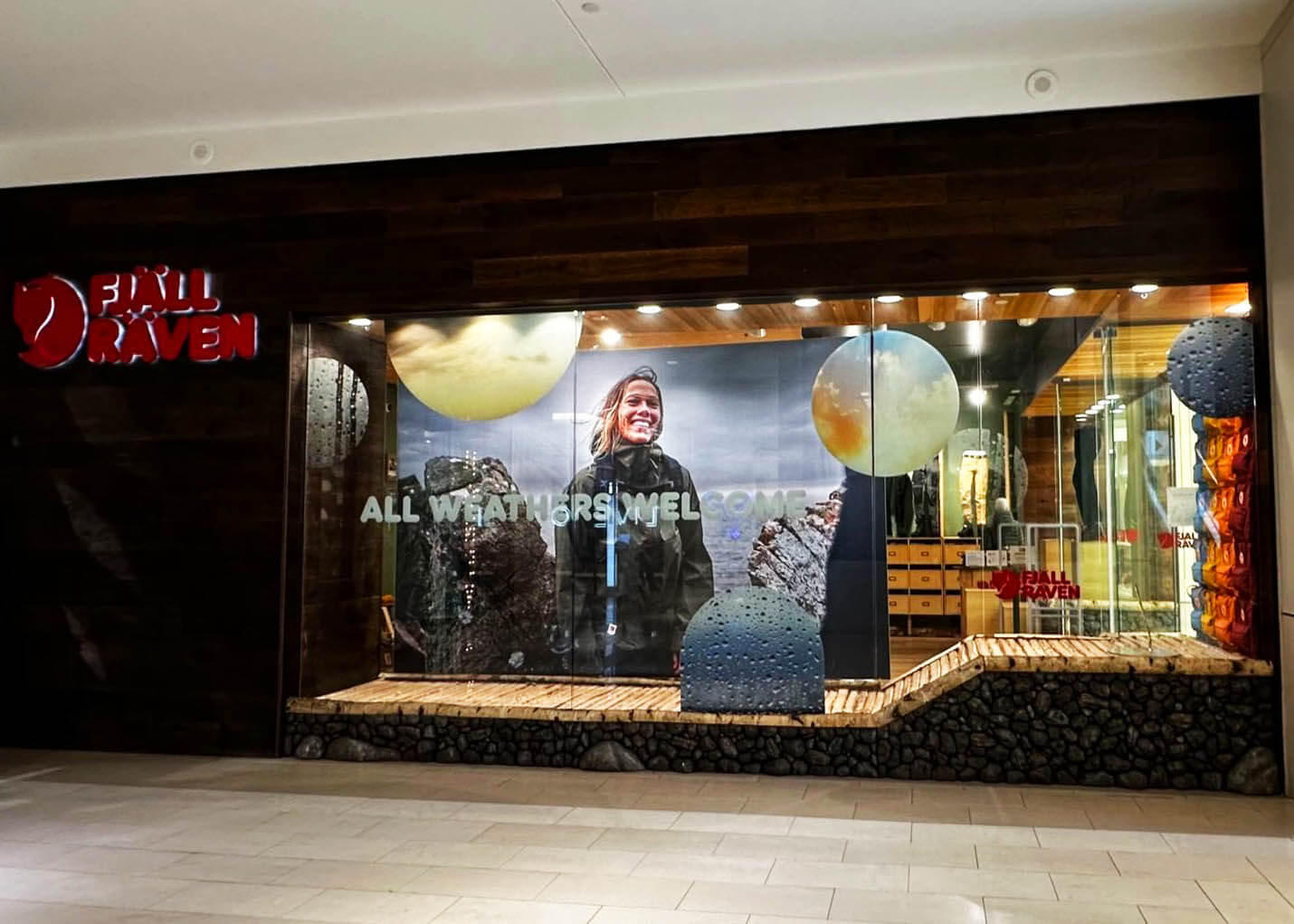
For Kayla, that kind of story isn’t just brand lore — it’s a visual merchandising directive. It shapes what goes on the front table during back-to-school season, what the window display communicates to someone walking by, and what in-store marketing materials get produced to support the moment. When the Kånken is the campaign focus, Kayla isn’t just placing backpacks on a shelf. She’s building the context around them — using signage, product placement, and storytelling touchpoints throughout the store to help a customer understand why this product has endured for over 50 years.
She sees that approach pay off constantly. She shares a story about a customer — a world traveler — who collected Fjällräven’s Keb trousers from different regions, each in a unique color assortment. He pulled out his phone and showed her a catalog of every pair he’d collected over the years. He never trekked in them. He just loved them.
That kind of loyalty doesn’t come from a single campaign. It comes from a customer walking into a store and feeling like they’re part of something with real history — and that feeling is built through every visual decision Kayla makes.
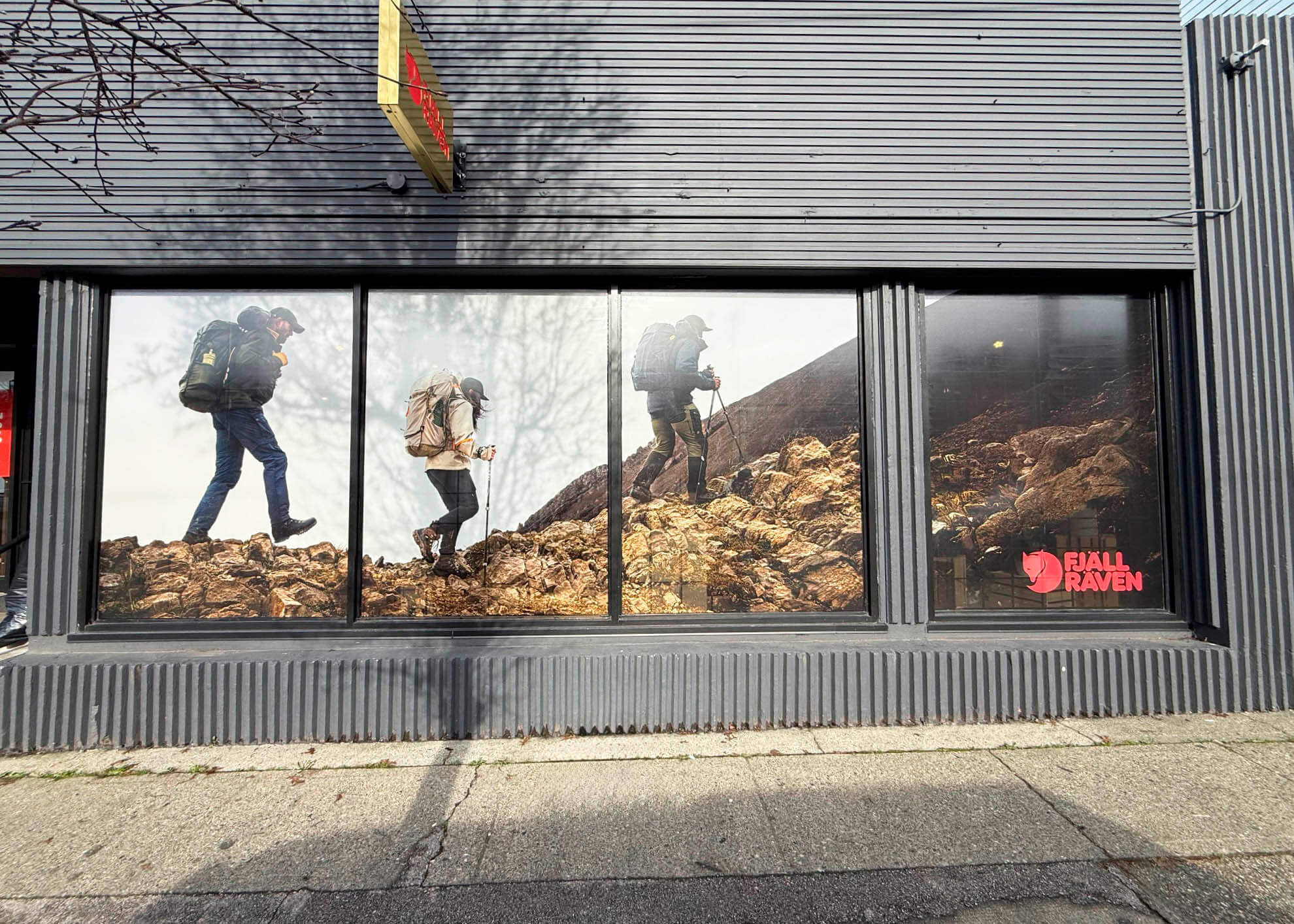
When asked what a Fjällräven store needs to feel like to know it’s right, Kayla doesn’t hesitate.
“It’s got to be warm, inviting, and intriguing.”
Those three words are doing more work than they might seem — especially “intriguing.” In Sweden, Fjällräven enjoys something close to a 92-95% brand awareness rate. In the Americas, that number sits closer to 35-40%. That means many customers walking through the door are encountering the brand for the first time. Some can’t pronounce the name.
That’s not a weakness in Kayla’s eyes. It’s the starting point of a conversation.
Intrigue is what gets someone to stop, pick something up, and ask a question. And once that question is asked, the story takes over.
Kayla describes this dynamic as something that holds true across both markets she manages. Whether a customer discovers the brand in Toronto or in a US store, once they connect with what Fjällräven stands for, they tend to stay. The European heritage, the commitment to sustainability, the no-nonsense approach to product — it resonates with consumers who are looking for something different from the major outdoor players.
The store just has to earn those first few seconds of curiosity. That’s what Kayla is designing for.
Designing for curiosity is one thing. Doing it consistently across 30+ stores when the creative direction originates on another continent is where the role gets really demanding.
Fjällräven’s campaign themes are developed by the global team in Sweden. They set the story, identify the key products, and establish the visual direction. For Spring 2026, for example, the global campaign is built around lightweight trekking — a “pack light, go further” message anchored by a new award-winning backpack, the Kika X Lat 45L.
From there, it’s Kayla’s job to figure out how that campaign actually comes to life inside each store — from front tables and windows to the marketing materials that carry the message from the entrance through to the back of the store.
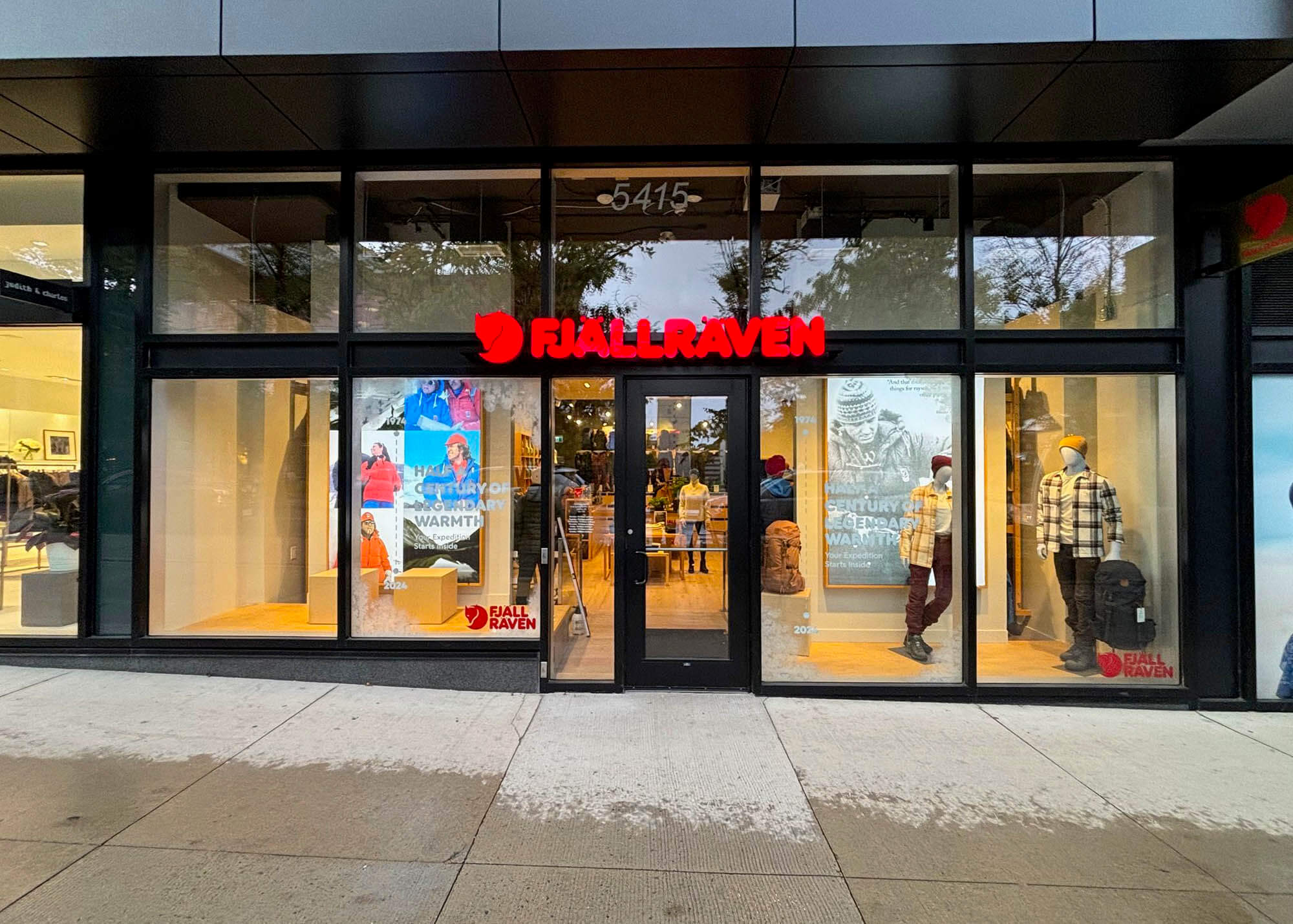
And it’s not just the major seasonal campaigns. Throughout the year, Kayla coordinates smaller stories — a sustainability-focused push timed to World Environmental Day, a back-to-school campaign centered around the Kånken, a spotlight on the brand’s newer cycling line — each requiring its own visual direction and store-level coordination.
With two store relocations currently in progress — Boston’s Newbury Street and Banff — plus ongoing campaign rollouts across the full fleet, her day-to-day is a constant mix of creative direction and logistical problem-solving.
“There’s not one thing that I work on every day,” Kayla says. “It’s kind of like everything’s going to be a bit different.”
That range is exactly what the role demands. And it’s a reality that anyone managing visual merchandising across a growing retail footprint will immediately recognize.
There’s a reason Kayla brings a different perspective to visual merchandising than most people in similar roles. Her path to getting here looks nothing like what you’d expect.
She studied sociology and was working toward a master’s in social work with plans to become a therapist. Then a detour to Whistler led to photography, which led to a side job at The North Face — which is where the merchandising bug hit. She was good at it. Good enough that she won a sales contest, went heli-skiing as the prize, and caught the attention of a mentor who pulled her into a marketing and merchandising coordinator role.
Nordstrom kept promoting her even while she insisted she was still just a student. Then COVID hit, retail stalled, and out of nowhere she got a cold call from a brand she’d never heard of.
She went home, looked it up, and said — oh, the backpack.
Fjällräven hired her to turn around the Toronto store. She did, became an area manager, started leading new store openings across North America and even in Switzerland, and eventually — with encouragement from a mentor — applied for the VM Manager role she holds today.
It’s an unconventional path. But that’s exactly the point. Visual merchandising at this level isn’t a single-skill job. It demands someone who can think creatively about storytelling, empathize with how a customer experiences a space, manage complex logistics across dozens of locations, and adapt when the plan falls apart. Those aren’t skills you build on one career track. They’re skills you collect from a lot of unexpected places.
Kayla references a book called The Squiggly Career by Helen Tupper and Sarah Ellis to describe this idea — that growth doesn’t move in a straight line, and the most interesting careers are the ones that zigzag. When she was a store manager, she’d get her teams to read it.
But the takeaway isn’t just about Kayla’s résumé. It’s that the same instinct that guided her career — following what felt authentic rather than chasing the obvious next step — is the same instinct she brings to merchandising for Fjällräven every day.
A brand that’s always evolved on its own terms ended up with a VM leader who got here the same way.
Kayla Kerbel’s approach to retail visual merchandising is a reminder that the most effective in-store experiences aren’t always the loudest or the most trend-forward.
Sometimes the strongest move is restraint — letting simple fixtures, product stories, and brand heritage do the work that flashy displays and constant reinvention can’t.
Sometimes the best campaign tool is a story from 1960 — because when a customer learns why something was made, not just what it is, the connection runs deeper than any window graphic alone.
And sometimes the right VM leader for the job is someone who never planned on being one — because the path that gets you there sideways is often the one that prepares you best.
Across 30+ stores and two countries, Kayla Kerbel is proving that brand truth, told simply and consistently, is the most powerful visual merchandising strategy there is.
And in a retail landscape that constantly demands more, that’s a philosophy worth paying attention to.